Occupational therapy helps children develop the skills they need to participate in daily life.
For children, daily life includes play, feeding, dressing, using their hands, moving safely through their environment, participating in family routines, preparing for school activities, and building independence.
At United Services for Children, our occupational therapists work with children from birth through age 12. Therapy is individualized to each child’s age, development, needs, and goals.
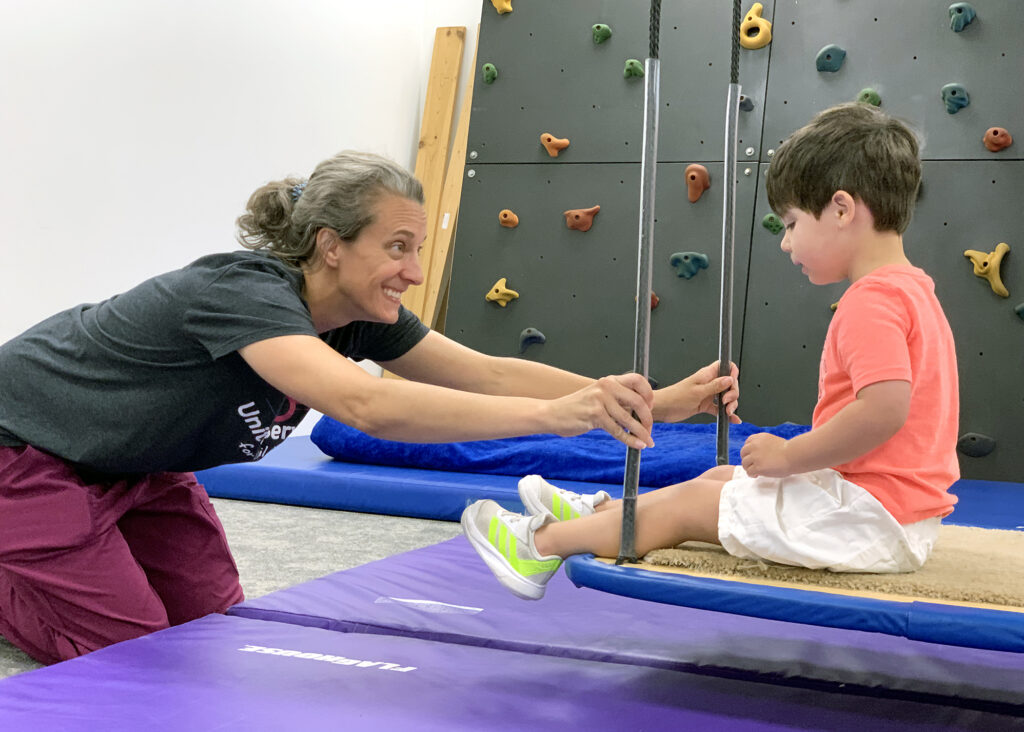
One tool families may see in our therapy gym is a swing. Swings can be used in many ways, and different swing attachments offer different types of movement, positioning, and support. An occupational therapist chooses the swing and activity based on what the child is working on during that session.
Swing-based activities may support balance, coordination, core strength, body awareness, motor planning, sensory processing, attention, and self-regulation.
These skills connect directly to daily routines. A child working on core strength and body awareness may be building the foundation for sitting, dressing, climbing, or playing safely. A child working on sensory processing may be learning how their body responds to movement. A child working on motor planning may be practicing how to start, sequence, and complete a movement activity.
Occupational therapy can also support fine motor skills, feeding skills, self-care routines, school readiness, social participation, and independence. The exact focus depends on the child.
That is why the same piece of equipment can look different from session to session. One child may use a swing while reaching for objects. Another may use it as part of an obstacle course. Another may use it to practice calming their body before moving into a tabletop activity.
The swing is the tool. The occupational therapist’s role is to connect that tool to the child’s goals.
At United Services for Children, occupational therapy helps children build practical skills they can use beyond the therapy room: at home, at school, and in the community.